
Meccha Chameleon: How to Play (Beginner Guide)
New to Meccha Chameleon? Learn how to play this paint-to-hide party game - the core loop, hider vs seeker roles, joining a match, and how to win. Mecha chameleon basics made simple.
最近更新: 2026-06-23
Meccha Chameleon: Beginner's Guide (How to Play)
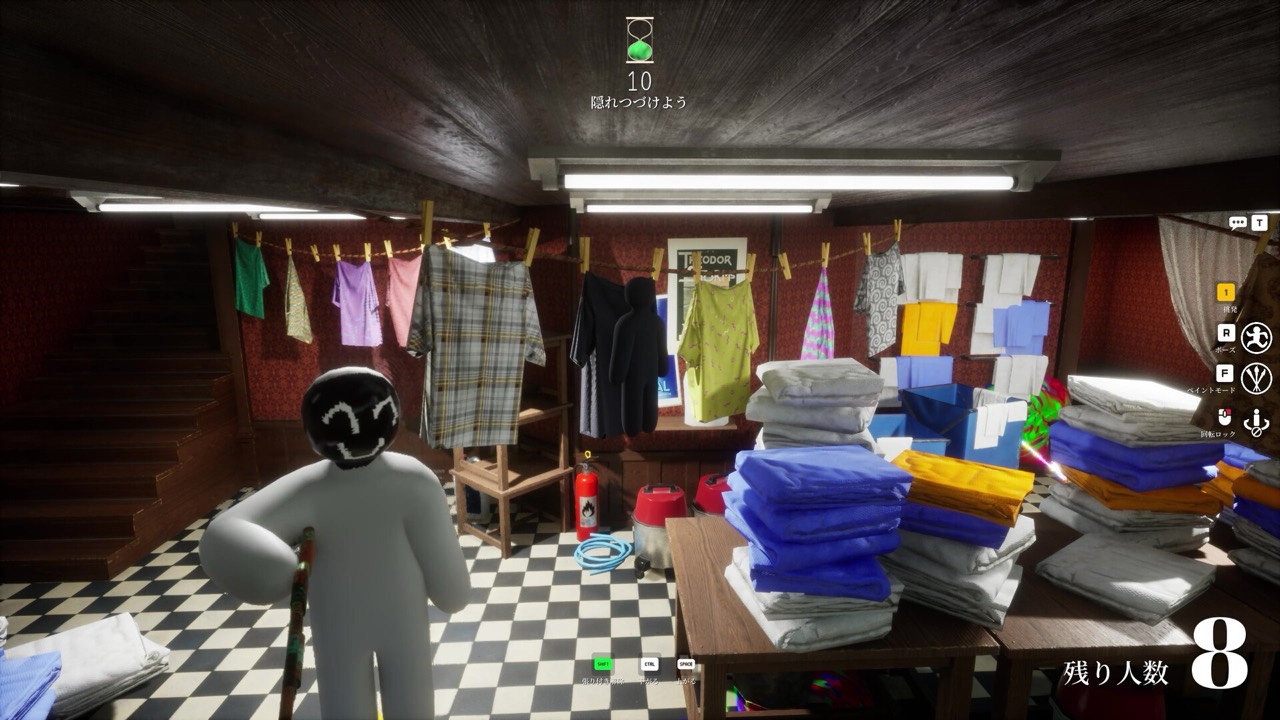
This Meccha Chameleon beginner guide gets you into your first match fast, because the game has one clever twist worth learning. Instead of hiding behind furniture, hiders paint their own plain white body to blend into walls, floors, and props, while seekers hunt them down. It launched on Steam on June 10, 2026 and exploded - roughly seven million copies in under two weeks - so if you just bought it (or are searching "mecha chameleon how to play"), this guide gets you winning.
What kind of game is Meccha Chameleon?
Think Prop Hunt, but instead of snapping into a preset object you blend in by painting freeform camouflage that matches the surface behind you. That makes hiding a skill with an infinite gradient rather than a list of objects to pick from. For a deeper side-by-side, see Meccha Chameleon vs Prop Hunt.
It is a PC-only Steam game for Windows, priced at 5.99 USD. Lobbies hold up to 24 players depending on the host's network, though 2 to 10 makes for the best matches. Full platform and price details live on the platforms page and the price page.
The core loop
Every round follows the same rhythm:
- Roles are assigned - some players become hiders, the rest become seekers.
- Prep phase - hiders get a short window to find a spot and paint a disguise while seekers are held back or blinded.
- The hunt - seekers are released and sweep the map looking for anything that does not belong.
- Resolution - hiders who survive the timer win; seekers who find everyone win. Then roles rotate and you go again.
Playing as a hider
This is where the game's personality lives. Your job is to disappear in plain sight. The short version of the paint loop:
- Pick your spot first, then set your pose (crouch, lie flat, curl up, or press against a wall) so your silhouette already matches an object.
- Open paint mode (default F) and eyedrop the actual surface (default Spacebar), grabbing a base tone, a shadow tone, and a highlight.
- Paint in layers - broad base tone, then believable noise (shadow plus texture), then a sparing accent. Never use one flat color; that is the biggest giveaway.
- Tune the material with the HSV sliders so your gloss matches the wall, then freeze and hold completely still.
The full walkthrough, with the logic behind each layer, is on the paint and color matching guide. You can also pre-plan a disguise with the free camouflage palette matcher before you ever load in.
Playing as a seeker
Seekers win by spotting paint flaws. The fast reads:
- Strafe and use parallax - real objects sit still, a disguised hider often "shifts" slightly against the background as you move.
- Walk the walls and look for texture that breaks, blurs, or changes angle, plus pattern-alignment failures on brick, tile, and wood paneling.
- Hunt lighting mistakes - a matte blob on a glossy surface, or vice versa.
- Sweep the obvious spots first, then check high shelves, beams, and ceilings that hiders love and seekers under-check.
More advanced reads for both sides are on the pro tips page.
Getting into a match
From the main menu you can host a private lobby to play with friends, or join a public server to play with strangers. The game uses Epic Online Services for matchmaking, and since everyone is on PC there is no crossplay to worry about. You can also pick a game mode - Normal (Classic Hide and Seek), Increasing Oni (Infection), or Double (Speed Hunt) - to change how a round plays.
Want to play community-made levels? Meccha Chameleon supports Steam Workshop, and the workshop guide walks through subscribing and hosting custom maps.
The prep phase matters most
Beginners rush the prep window and end up with a sloppy disguise. Slow down. The few seconds you spend choosing a good spot, setting your pose, and laying clean layers decide the whole round. A dim alcove forgives small paint mistakes, so in your first games favor shadowed corners over bright open walls. The friendliest learning map is the Mansion; the maps overview ranks them by difficulty.
How to win consistently
- Learn one or two reliable spots per map before chasing fancy ones.
- Match shape and material, not just color.
- Hide at eye level or above when you can.
- Once you freeze, do not move - patience wins more rounds than cleverness.
That is the whole starter kit: pick a spot, pose, layer your paint, match the material, then freeze and wait. Run the loop a few rounds and it becomes second nature. Ready your first disguise with the free camouflage palette matcher, then jump into the paint guide to master the details.
On a Mac? There is no native macOS build, but you can still get the game running — see the step-by-step guide to playing Meccha Chameleon on Mac.